05 / Conviction
Every Surface We Clean Today Is Quietly Writing Tomorrow's Diagnosis
“Reduction is a delay, not a direction.”
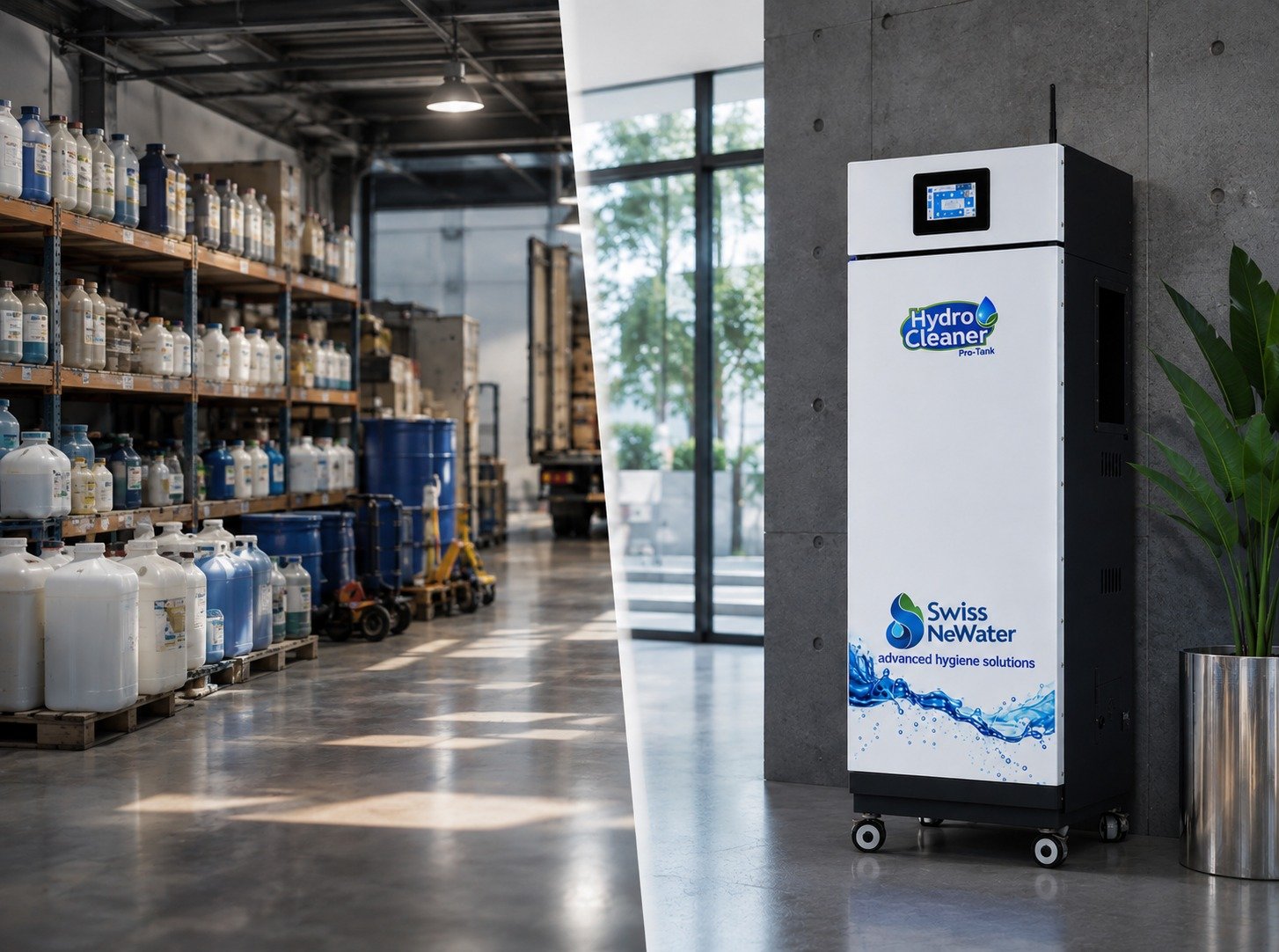
We spent a century solving the problem of germs by manufacturing, shipping, storing and pouring
chemicals — and created a second problem we never priced in. Those chemicals do not disappear.
They settle. Into water, into soil, into food chains, into lungs and skin and bloodstreams. We
call it hygiene. Nature files it as deposition.
This is not an environmental issue sitting apart from a health issue. It is one issue. The cost
of conventional cleaning is paid twice — once at the invoice, and again, years later, in
hospitals and in depleted ecosystems. A model that produces both bills cannot honestly be called
sustainable living. It is borrowed living.
My instinct — and after fifty years, instinct is largely pattern recognition — is that we will
not solve this by using slightly less of the wrong thing. The step that changes the trajectory
is to remove the chemical from the equation entirely: generate the cleaning agent on site, from
water, at the moment of use. That is what the HydroCleaner does, and why I built Swiss NeWater
around it.
What makes it a decision rather than a debate is that it asks no one to choose between
conscience and cost. It is cheaper across its working life, safer in the hands that use it, and
it leaves nothing behind for the next generation to clean up.
Let me be direct about where you come in. The technology is not the bottleneck — it exists, it
works, it is deployed. The bottleneck is the number of leaders willing to be early. Every
hospital, hotel, campus, municipality, food plant and factory that adopts this becomes the
reference the next hundred were waiting for. That is what thought leadership actually is: not
commentary on the future, but the first order placed for it.
I am not asking you to believe in a distant vision. I am asking you to make one procurement
decision differently — now, while it is still a choice and not yet a regulation.
Nature responds the way you treat it. Let's give it something better to respond to.
Start the Conversation